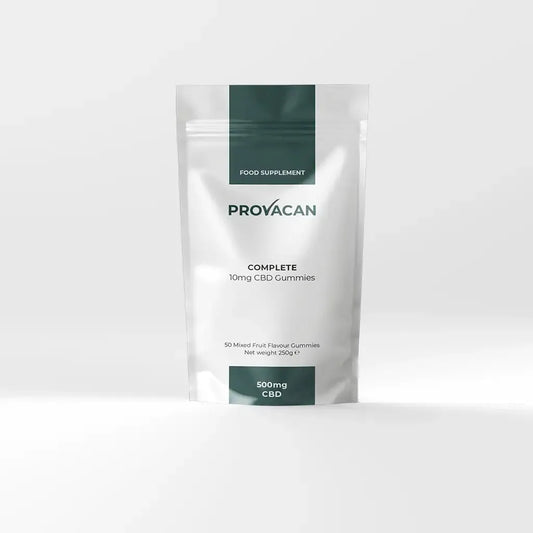

As life begins to gather pace with the arrival of spring, many of us notice a subtle but steady build-up of pressure. The Easter holidays are fast approaching, calendars fill with social commitments, and what once felt manageable can quickly turn into a seemingly endless to-do list.
It’s perhaps no surprise that April is Stress Awareness Month - a national campaign dedicated to opening the conversation around something so many of us experience, yet don’t talk about nearly enough…
Why are we all so stressed - and more importantly - what can we do about it?
This year’s theme is #BeTheChange and is inspired by Gandhi’s invitation to “be the change you wish to see in the world”. At its core, the campaign aims to educate the public on the causes and effects of stress, promote practical tools to support mental health, and encourage more honest, stigma-free conversations (1).
While we can’t always escape stress, we can utilise tools and strategies which support our ability to cope under pressure.
Recent findings suggest that around 3 in 5 UK adults experience anxiety that interferes with their daily lives (2). For many, it becomes a constant background noise: something to push through, ignore, or even normalise.
In my experience as a Clinical Nutritional Therapist, chronic stress is often a sign that something isn’t working. It can serve as an invitation to re-assess commitments, listen more closely to the body’s cues, and create space for self-care.
When we begin to view stress through this lens, the conversation shifts. It becomes less about fighting our circumstances and more about learning to regulate the nervous system in a way that feels supportive, sustainable, and deeply human.

Understanding stress: A signal from the nervous system
1. Why our nervous system uses stress as feedback
To really understand stress, and how to regulate the nervous system in a way that feels supportive rather than restrictive, we need to start with a fundamental shift in perspective. Stress is often not the problem, it’s merely the body’s way of communicating discomfort.
At any given moment, your nervous system is taking in information from your environment, your thoughts, and your physical state. It’s constantly assessing whether you are safe, supported, and resourced enough to cope with what’s in front of you. When that sense of safety is disrupted, whether by a looming deadline or an unresolved emotional stressor, the body responds accordingly. Heart rate increases, muscles tense, breathing becomes shallow, and stress hormones are released to help you take action (3).
2. The different types of stress, explained
Stress manifests in several forms, and recognising the type you are experiencing can help you respond more effectively. This is a key part of the conversation during Stress Awareness Month, which invites us not only to acknowledge stress, but to better understand how we work with it.
- Acute stress is short-term and immediate, the classic “fight-or-flight” response. It can enhance focus, decision-making, and adaptability. Once the trigger passes, the nervous system usually returns to baseline.
- Chronic stress occurs when the system is under continuous pressure without sufficient recovery. Persistent activation can dysregulate cortisol levels (4), leading to fatigue, poor sleep, anxiety, and increased risk of long-term health issues.
- High-functioning stress is subtler, blending acute and chronic stress. Outwardly, everything appears fine, yet internally, the nervous system remains in a constant state of low-level activation. Signs may include difficulty switching off at night, irritability, reliance on caffeine, and a sense of restlessness despite downtime.
High-functioning stress is often reinforced by societal narratives that reward “pushing through”. However, the nervous system measures load, not output. Without intentional strategies on how to regulate the nervous system, stress accumulates until it overflows - regardless of how well you appear to cope.
The stress bucket theory
If stress is a signal from the nervous system, then the next question becomes: why does it sometimes feel like too much?
This is where the stress bucket theory offers a helpful, visual way to understand what’s happening beneath the surface. Imagine your capacity for stress as a bucket. Throughout the day, different inputs begin to fill it: deadlines, poor sleep, blood sugar dips, emotional strain, constant notifications, even high-intensity exercise. Some of these are obvious. Others are subtle, but no less impactful. Each one adds a little more to your overall load. And crucially, the bucket is always in motion.
 Because alongside what fills it, some practices create outflow - the things that help your nervous system process, regulate, and return closer to balance.
This can include:
- Consistent, restorative sleep
- Gentle movement or time outdoors
- Eating balanced meals to support stable energy
- Setting boundaries around work and social demands
- Intentional pauses throughout the day
- Targeted approaches, including certain supplements for stress
It’s not about “emptying” the bucket entirely - because stress is not something we can, or should, eliminate. It’s about creating enough healthy outflow to match the inflow.
Why resilience looks different for everyone

One of the most important (yet often overlooked) aspects of the stress bucket is that no two buckets are the same. One person’s capacity to handle stress isn’t just about mindset or motivation. It’s shaped by a combination of physiological and lived factors, including:
- Genetics: influencing how your body responds to and recovers from stress
- Past experiences and trauma: which can sensitise the nervous system over time
- Nutritional status: impacting energy, hormone balance, and resilience (5)
- Sleep quality and quantity: one of the most powerful regulators of stress response (6)
- Lifestyle patterns: including workload, movement, and recovery
For some, the bucket may naturally be larger, with more capacity to absorb stress before it feels overwhelming. For others - particularly high performers who have spent years pushing through - the bucket may be smaller than it appears.
Chronic overextension, even in the name of productivity or success, can reduce the nervous system’s flexibility over time. This is often where frustration creeps in. You might look around and wonder why others seem to cope more easily. Why your threshold feels lower - but this isn’t a failure of resilience, it’s a reflection of capacity - and capacity can be supported.
Recognising early signals
The theme of Stress Awareness Month this year, #BeTheChange, speaks to something deeper than external action. It’s about awareness and the willingness to notice what your body is communicating before it reaches a breaking point.
There are almost always early signals:
- Feeling more reactive or emotionally sensitive than usual
- Subtle dips in energy or motivation
- Changes in sleep patterns
- A growing reliance on caffeine or sugar
- A sense of being “on edge” without a clear reason
These are not inconveniences to ignore. They are invitations to respond. Learning how to reduce stress naturally begins here - not with drastic interventions, but with the ability to recognise when your system is under load, and to meet it with the right kind of support.
And for many people, that support becomes most effective when it’s layered: lifestyle foundations, daily regulation practices, and, where appropriate, targeted nutritional support. Because when you understand your bucket - what fills it, what supports it, and when it needs attention - you move from reacting to stress, to working with it.

Resilience isn’t toughness, it’s recovery speed
Resilience is often misconceived as endurance or toughness, but physiologically, it is about recovery speed: how quickly the nervous system returns to baseline after stress.
Adaptability is supported by processes such as neuroplasticity, allowing the brain to reorganise and form new patterns in response to experience (7). When the system is flexible, stress responses are shorter-lived; when it is less flexible, the body can remain in a heightened state long after a stressor has passed, creating a sense of being “stuck.”
Your bounce-back rate - the speed at which you return to equilibrium - is a key marker of resilience. This can be strengthened over time, and the focus should shift from enduring stress to supporting recovery.
How to regulate your nervous system naturally
Since stress cannot be removed entirely, the goal becomes helping the body move through it efficiently. When considering how to reduce stress naturally or how to regulate the nervous system, effective strategies combine foundational habits with targeted support:
- Sleep and recovery: Prioritising high-quality sleep allows the nervous system to recalibrate (6).
- Movement: Gentle exercise like walking, yoga, or stretching helps complete the stress cycle without adding extra load.
- Breathwork and mindfulness: Slow, controlled breathing signals safety to the nervous system, supporting regulation.
- Nutrition: Stable blood sugar, adequate protein, and nutrient-dense meals create a predictable internal environment. Consider exploring targeted supplementation to offer further support, best supplements for stress resilience include magnesium, B vitamins, CBD or adaptogens.
- Social connection and hobbies: Meaningful interaction and activities that promote flow provide recovery and cognitive relief (10).
These practices, consistently applied, build a body that tolerates stress without being overwhelmed.

CBD supplements for stress: a tool for restoring balance
Alongside lifestyle foundations, CBD for stress has gained attention as a supportive tool for stress management. It interacts with the endocannabinoid system (ECS), which helps maintain homeostasis by regulating mood, sleep, appetite, pain perception, and the stress response (9).
Emerging evidence suggests CBD may:
- Modulate cortisol and support a calmer physiological state
- Promote relaxation without sedation
- Improve sleep quality (11,12)
As interest grows in the best CBD for stress, it’s important to recognise that CBD is not a cure or a quick fix. It is most effective as part of a broader toolkit, complementing sleep, nutrition, movement, breathwork, and social connection - alongside other supplements for stress where appropriate. Quality matters: products should be third-party tested, clearly labelled, free from unnecessary additives, and sourced from reputable brands.

Be the change: building a resilient future
Perhaps the most meaningful shift this Stress Awareness Month is to change the question we ask. Rather than “How do I avoid stress?” we might instead ask:
“How can I support my body to move through this stressful period?”
Fundamentally, stress is not the enemy. It is a signal, and when understood and supported, it can guide us toward a more balanced, resilient way of living. By focusing on regulation, recovery, and capacity, we can transform stress into a friend.
If you’re unsure where to start, or want a more personalised approach, our free consultations are designed to help you better understand your stress response and create a routine tailored to you: whether that includes lifestyle shifts, recovery strategies, or incorporating CBD in a way that supports your body. No strings attached, just personalised advice.
Sources
- Stress Management Society. Stress Awareness Month 2026. https://www.stress.org.uk/stress-awareness-month-2026/
- Mental Health Foundation. Our new research reveals anxiety is gripping the UK. https://www.mentalhealth.org.uk
- McEwen, B.S. (2007). Physiology and neurobiology of stress and adaptation: central role of the brain. Physiological Reviews.
- McEwen, B.S. & Wingfield, J.C. (2003). The concept of allostasis in biology and biomedicine. Hormones and Behavior.
- Calder, P.C. (2020). Nutrition, immunity and COVID-19. BMJ Nutrition, Prevention & Health.
- Medic, G., Wille, M., & Hemels, M.E.H. (2017). Short- and long-term health consequences of sleep disruption. Nature and Science of Sleep.
- Davidson, R.J. & McEwen, B.S. (2012). Social influences on neuroplasticity: stress and interventions to promote well-being. Nature Neuroscience.
- Kox, M. et al. (2014). Voluntary activation of the sympathetic nervous system and attenuation of the innate immune response in humans. PNAS.
- Zou, S. & Kumar, U. (2018). Cannabinoid receptors and the endocannabinoid system: signaling and function in the central nervous system. International Journal of Molecular Sciences.
- Eisenberger, N.I. & Cole, S.W. (2012). Social neuroscience and health: neurophysiological mechanisms linking social ties with physical health. Nature Neuroscience.
- Blessing, E.M. et al. (2015). Cannabidiol as a potential treatment for anxiety disorders. Neurotherapeutics.
- Shannon, S. et al. (2019). Cannabidiol in anxiety and sleep: a large case series. The Permanente Journal.